Skip to Content
Elanq
  • Digital commerce
    • Headless ecommerce
    • Dashboard
    • App
  • Services
    • Strategic analysis
    • Implementation
    • Project management
  • About us
  • Nederlands English Deutsch
  • Schedule appointment
Elanq
      • Digital commerce
        • Headless ecommerce
        • Dashboard
        • App
      • Services
        • Strategic analysis
        • Implementation
        • Project management
      • About us
    • Nederlands English Deutsch
    • Schedule appointment

    Headless Odoo architecture
    Alokai


    A headless architecture with Odoo and Alokai is a strategic choice for high-performance e-commerce. We fundamentally decouple the systems. The Odoo backend functions as the central brain for all business logic, while Alokai delivers the lightning-fast, optimized user experience. An external CMS is connected in parallel for maximum content freedom.

    Odoo-Alokai architecture

    Fixed components

    The architecture consists of a fixed number of elements.

    Odoo

    Backend ERP system

    In this architecture, Odoo serves as the 'headless' backend and the undisputed 'single source of truth'. All business logic resides in Odoo.

    Among other things, the following components are used:

    • Product management: products, variants, attributes
    • Inventory management
    • Pricing: Product price, price lists, discounts
    • Customer data: Users, individuals, companies, shipping addresses, billing addresses, etc.
    • Order processing

      • Sales order
      • Order lines
      • Shipping
      • Payment terms
    Odoo

    Alokai

    The frontend

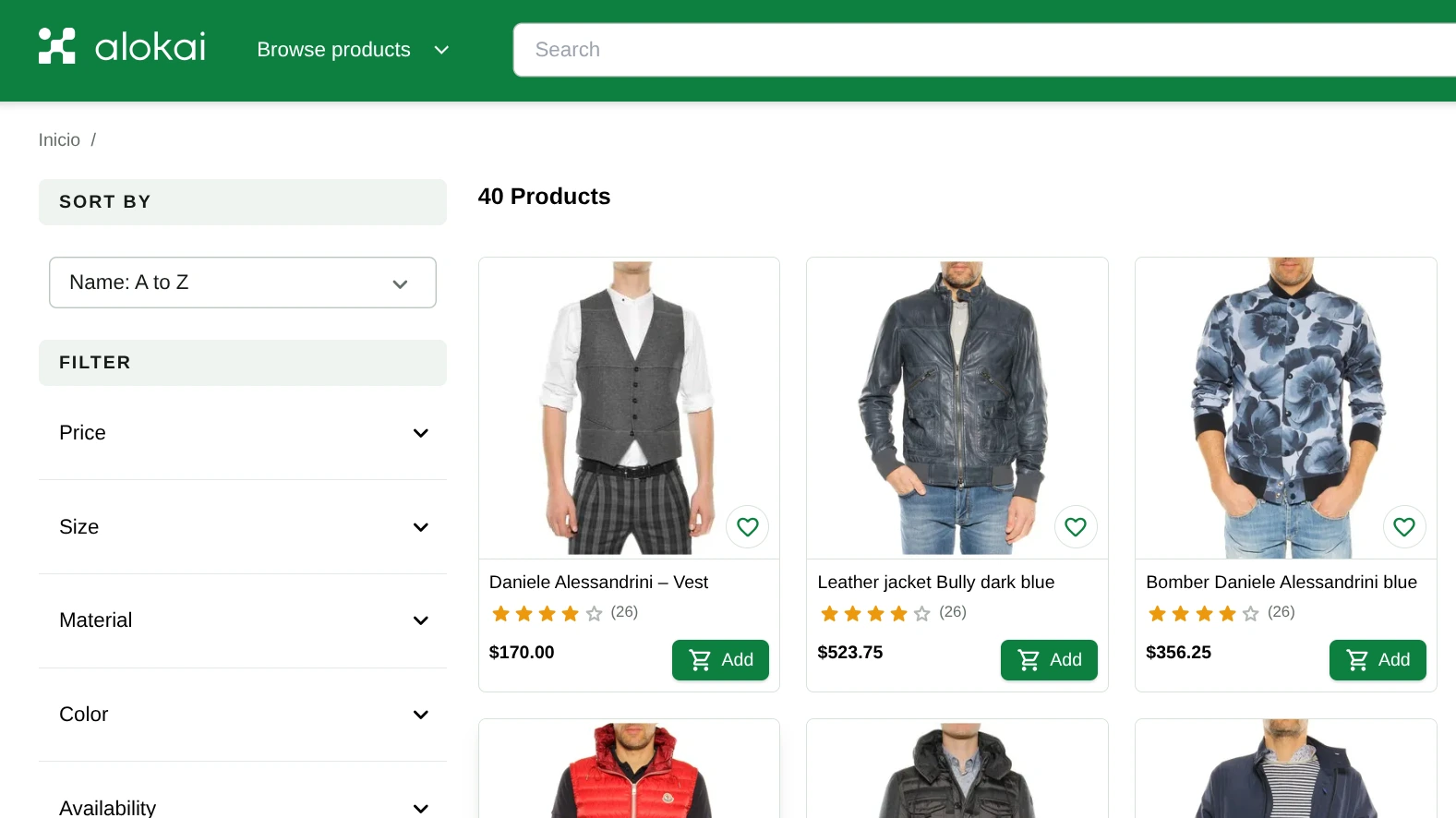
    Alokai is the high-performance frontend framework specifically designed for ecommerce. You can think of this as the 'presentation layer' of yourwebshop/app. It provides the structured, reusable components (such as the shopping cart, product galleries, and checkout flows) that we use to build your unique user experience. Alokai is optimized to be incredibly fast and prioritize the customer experience, but it does not contain any data itself; it is purely the interface.

    The standard Alokai webshop template. This is the starting point of your website/app.

    Nuxt.js

    Framework based on Vue.js

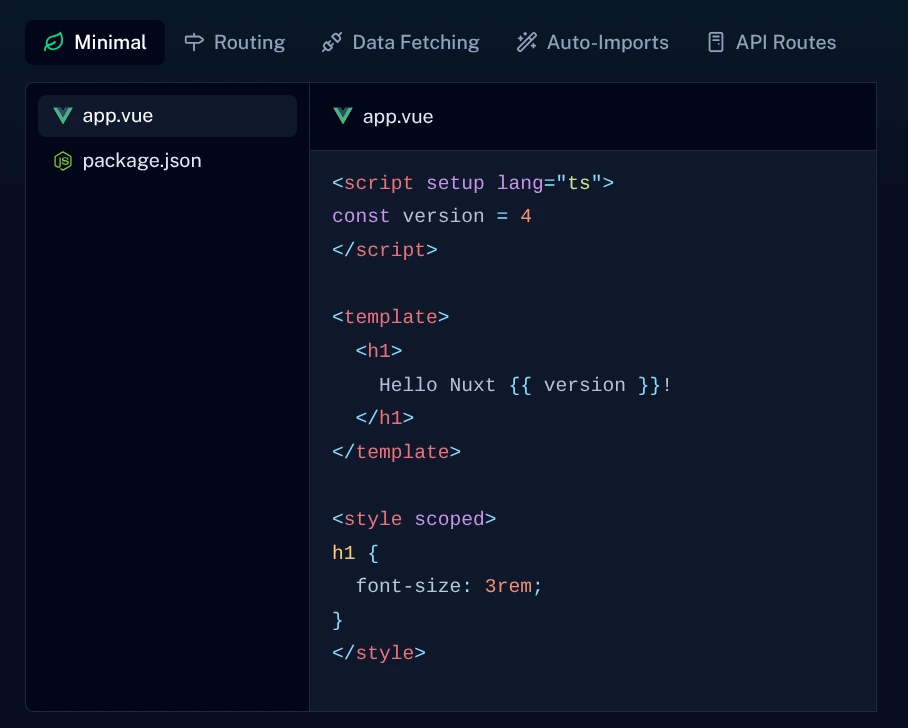
    Under the hood of Alokai runs Nuxt.js, a framework that in turn is based on Vue.js. Nuxt is the engine that handles the actual rendering of the pages. The main role of Nuxt is to enable Server-Side Rendering (SSR) or Static Site Generation (SSG). This means that the web pages are prepared on the server and sent as complete pages to the customer's browser. This process is fundamentally faster than a traditional website and crucial for optimal SEO and loading times.

    Nuxt

    Middleware

    The orchestrator and aggregator

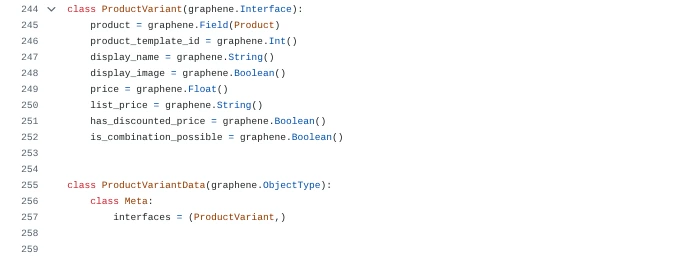
    The middleware is the essential 'translator' or orchestrator that sits between the Alokai frontend and the Odoo backend. When a customer visits your webshop and requests, for example, a product page, the Alokai frontend does not directly ask Odoo for this. It asks the middleware. This middleware receives the request, retrieves the necessary product data via GraphQL, potentially adds content from the CMS, structures this data in an efficient format, and then sends it back as one optimized response to the frontend.

    Middleware Odoo-Alokai Github

    View repo

    GraphQL

    Efficient query language

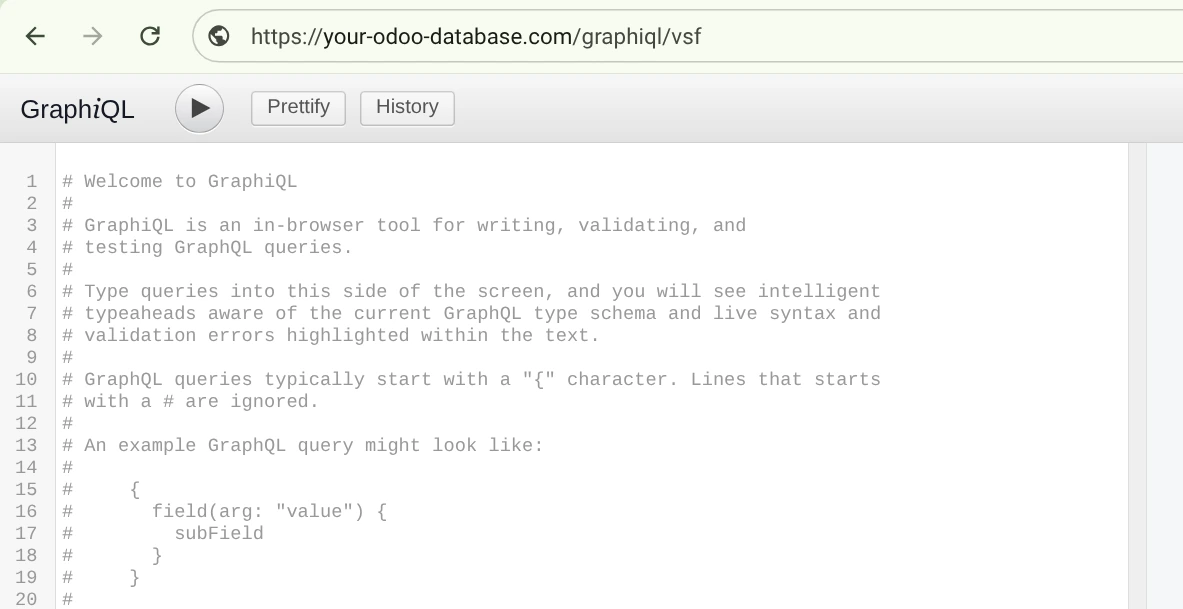
    GraphQL is the 'language' used for communication between the Alokai frontend and the middleware, and often also for the middleware to the backend systems. While traditional REST APIs often return fixed, large blocks of data (even if the frontend only needs one small piece of information), GraphQL allows the frontend to ask a very specific question. For example, the frontend can ask: "Give me only the name, price, and stock status of product X." This prevents unnecessary back-and-forth data transfer, minimizes data transfer, and makes the entire architecture extremely efficient.

    Query Odoo using GraphQL

    Redis

    In-memory caching

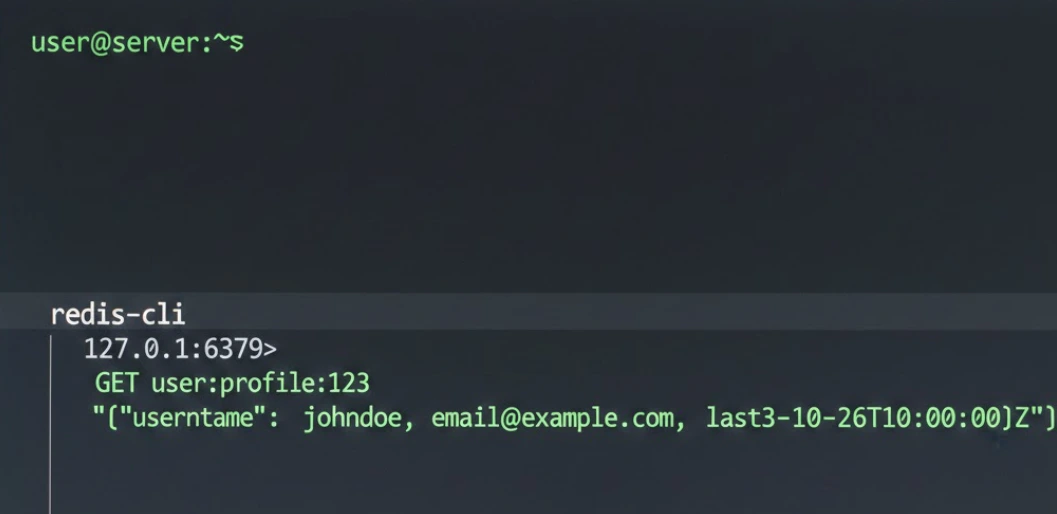
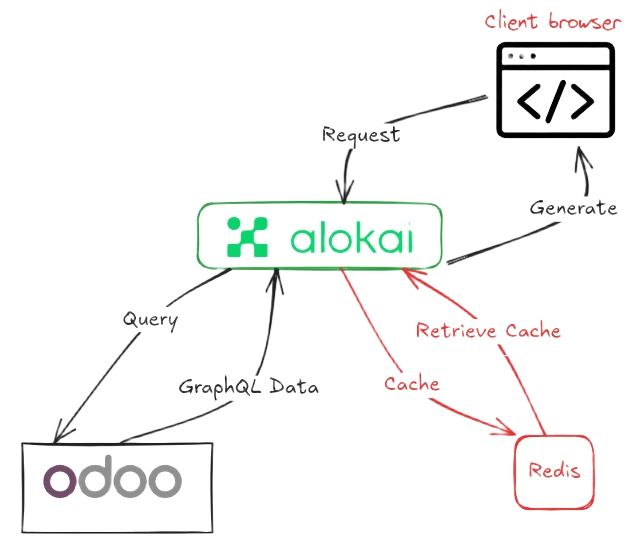
    Redis serves as a crucial in-memory database and cache. The middleware makes intensive use of this to temporarily store frequently requested data in the lightning-fast RAM memory. When a new request for this data comes in, Redis can serve it directly without the middleware having to go all the way to Odoo. This drastically reduces the load on the Odoo backend, eliminates bottlenecks, and speeds up the website's response time to a fraction of a second, even under high traffic.

    Redis caching speed up Odoo frontend

    Who is Odoo headless a solution for?

    Companies that...

    • ...strive for significant online growth and market leadership.
    • ...experiencing bottlenecks with their current ecommerce platform.
    • ...need a personalized and scalable digital experience.
    • ...want to make optimal use of the power of Odoo.
    • ...understand that falling behind competitors incurs costs.

    Discover Odoo headless

    Explore
    • About us
    • Portfolio
    • Blog
    • Privacy policy
    Services
    • Strategic analysis
    • Headless Implementatie

    Elanq

    Kasteelstraat 250, 
    6598 CK Heijen
    Netherlands 

    Follow us
    • Linkedin

    Get in touch
    • Schedule appointment
    • hello@elanq.com
    Copyright © Elanq
    Nederlands | English | Deutsch
    Powered by Odoo - Create a free website

    We use cookies to provide you a better user experience on this website. Cookie Policy

    Only essentials I agree